
St. Louis Foundation Co. connects you with a local specialist for the full failure chain St. Louis clay causes: settlement (piering from $1,200/pier), bowing walls (from $2,500), cracks (from $400), wet basements (from $2,500), and sunken concrete (from $500). Each with a measured evaluation first.
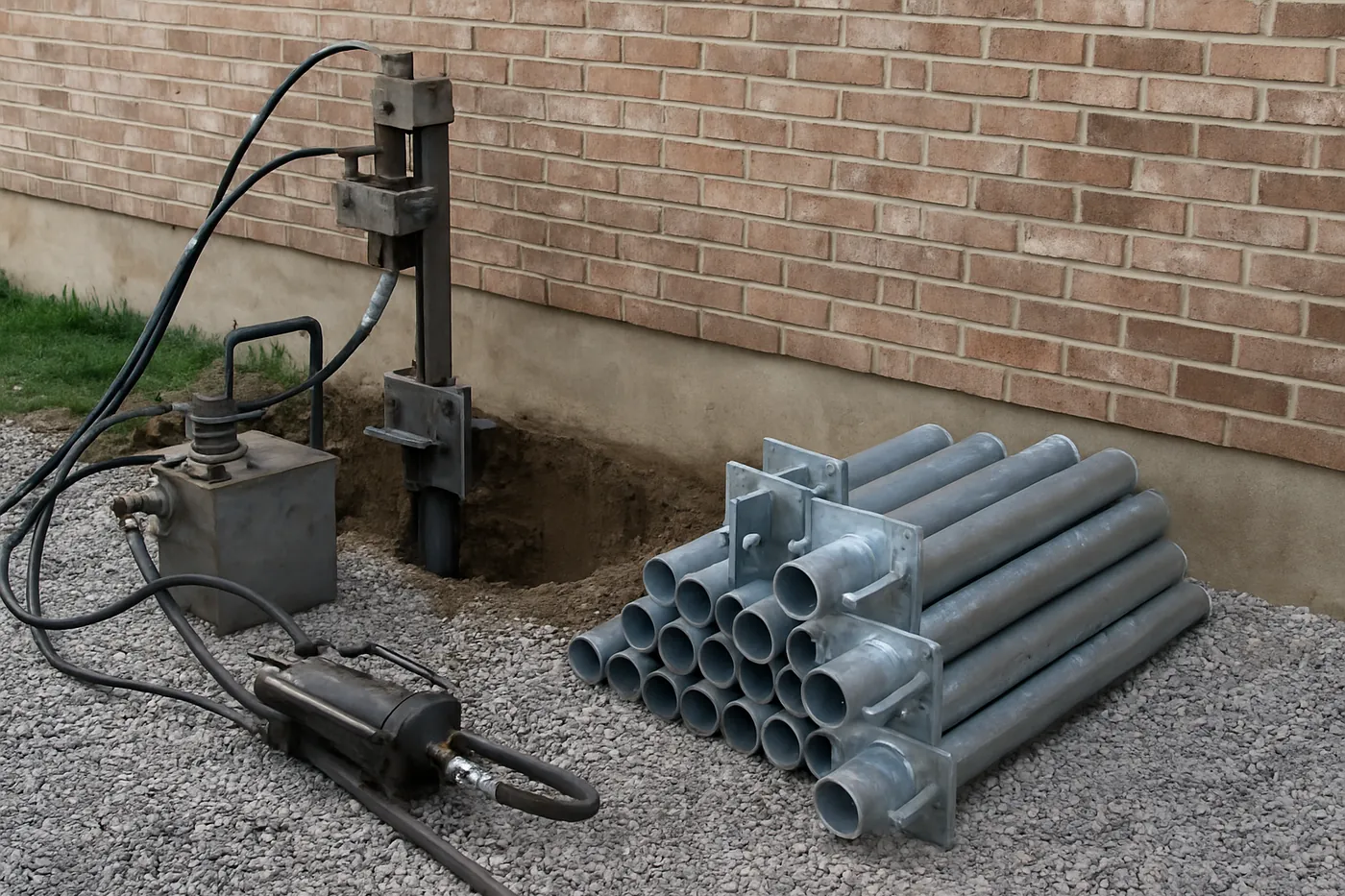
Foundation Piering & Underpinning
Steel piers driven past the moving clay to load-bearing strata: the permanent fix for settlement.
Bowing Basement Wall Repair
Braces, anchors, and straightening for walls the clay is pushing in: the signature St. Louis failure.
Foundation Crack Repair
Injection, sealing, and reinforcement for cracks that leak or keep widening.
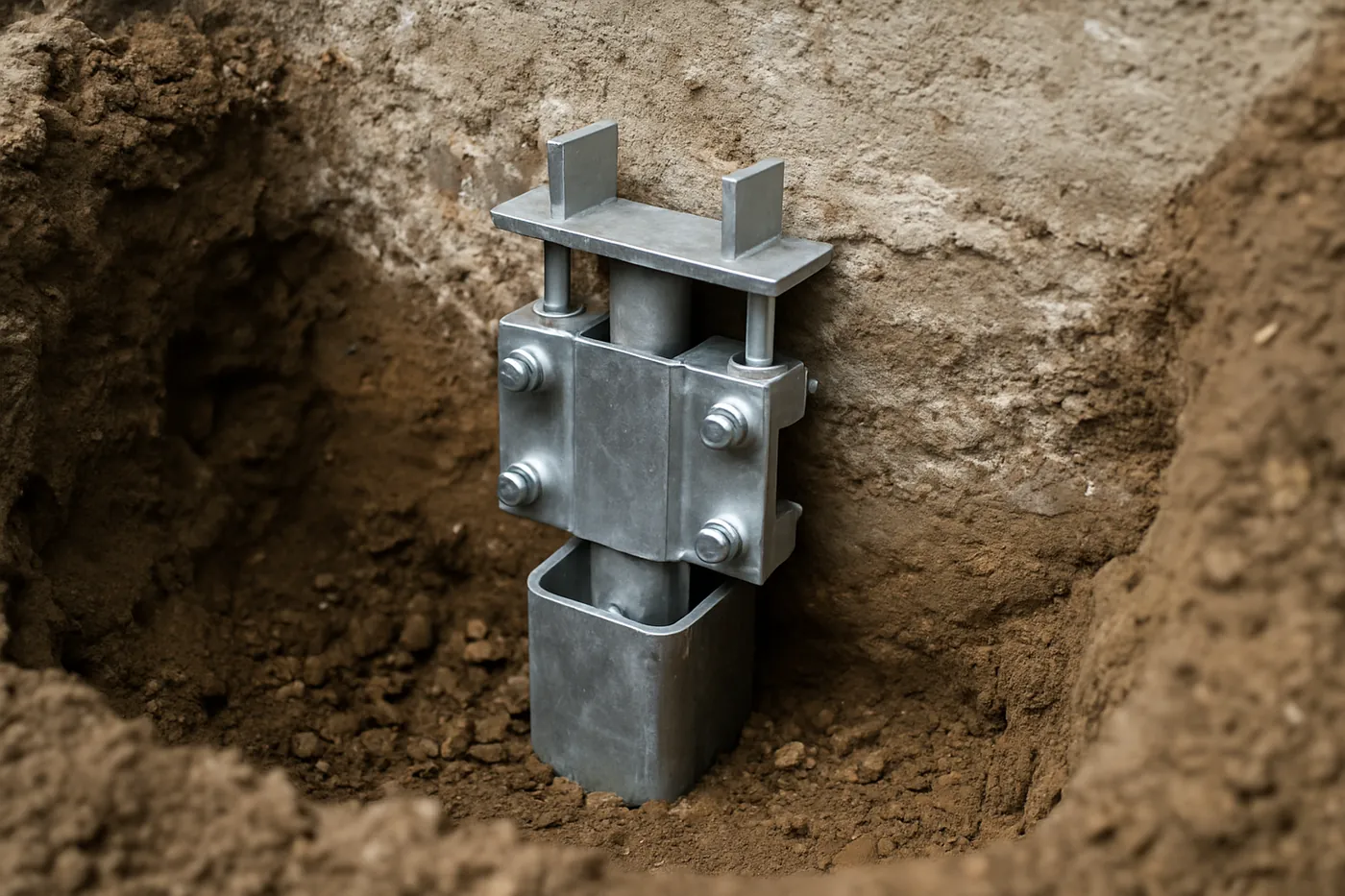
Basement Waterproofing
Interior drainage, sump systems, and grading correction that take the water pressure off the walls.
Concrete Leveling
Lifting sunken driveways, patios, garage floors, and walks back to grade: without replacement.
Foundation Settlement Repair
Clay cycles north, karst voids south: two settlement stories, one measured diagnosis.
Helical Piers vs Push Piers
Century brick or postwar frame decides the steel: torque-proven or refusal-driven.
Exterior vs Interior Waterproofing
Seal the wall or drain the footing: the honest trade for a full STL basement.
Insurance & Foundation Repair
Missouri’s earth-movement exclusion, the sudden-discharge exception, and the sinkhole question.
Structural Engineer or Contractor?
When a stamped opinion earns its fee on century brick, and when the survey is enough.
Cost Guide: What Repairs Run in St. Louis
Every repair class priced for this metro, the four factors that move a quote, and how to compare bids.
Why the services come as a set
The metro's shrink-swell clay doesn't specialize. The same saturation that bows a basement wall leaks through its cracks, floats the patio slab, and (come drought) settles the footing it spent spring pushing. Companies organized around one product sell that product; a good evaluation is organized around the clay, which is why it reads the whole chain and the scope only includes the links your house actually needs.
Which repair fixes which failure
Every foundation symptom in this metro traces to one of five mechanical problems, and each has one honest fix. This is the map the evaluation walks through with you:
| What you see | What's happening | The fix | Typical range | Time |
|---|---|---|---|---|
| Stair-step brick cracks, sticking doors, sloped floors | Footing settling as clay shrinks under it | Steel piers to load-bearing strata | $4,000–$15,000+ | 2 days–1 week |
| Horizontal wall crack, inward bulge | Saturated clay pushing the wall laterally | Carbon fiber, braces, or anchors | $2,500–$10,000 | 1–2 days |
| Vertical crack leaking or widening | Shrinkage or minor movement opening a path | Injection with reinforcement | $400–$1,500 | Hours |
| Water at the cove joint, damp walls | Hydrostatic pressure with nowhere to drain | Interior drainage and sump | $2,500–$8,000 | 1–3 days |
| Sunken driveway, patio, garage slab | Fill washout or clay shrink under the slab | Polyurethane lifting | $500–$2,500 | Hours |
Multiple symptoms usually mean one cause expressing itself in more than one place, which is why scoping them together, in one visit, beats three separate contractors diagnosing three separate "problems."
How the ground under St. Louis decides the repair
Three soil regimes run through this metro, and the right repair depends on which one your street sits on. The upland clay belt (most of the city, Kirkwood, Webster Groves, Affton, Florissant) is shrink-swell clay that cycles with the seasons; it drives the classic bowing-wall and settlement pattern, and repairs there are engineered around lateral pressure and reaching below the active layer. The river valleys: Chesterfield Valley, the St. Charles bottoms: sit on deep alluvium that moves with moisture at depth, so piering there is specified for depth-to-refusal, not a standard pier count. And the south county karst belt around Oakville rides on limestone that moves groundwater unpredictably, where sudden or accelerating settlement gets treated as a flag for deeper investigation before anyone quotes a fix.
Missouri's residential code puts frost depth at 30 inches here, and the metro cycles through freeze and thaw dozens of times each winter. One more load the ground puts on a footing every year. A repair that ignores which regime it's standing in is a repair priced to be redone. A sound scope names the regime in writing, because the evaluation measured it.
Permits, engineering, and paper that matters at resale
Structural repair in the St. Louis metro is paperwork-heavy for good reason: buyers and their inspectors know these soils. Piering and wall-restraint work typically involves municipal permits, and lenders on a future sale will want to see the repair documented: what was installed, where, to what depth or torque, under whose engineering. Ask for a scope written to survive that scrutiny: measurements and photos from the evaluation, detailed installation records, and warranty terms in writing. If a bid you're comparing can't produce that paper trail, price the difference accordingly: the discount usually reappears at closing time.
Service questions
Which service do I actually need?
Usually the evaluation answers that in an hour. Cracks alone often mean injection; anything horizontal or bowing means wall restraint; doors racking with sloped floors points at piering; water drives half of it. Many local specialists don't charge for the first visit, so the diagnosis shouldn't depend on what anyone would like to sell; ask when they call.
Is there a charge for evaluations?
Many local specialists don't charge for the first visit, but it depends on the company, so ask when the specialist calls. A good visit covers crack measurements and laser floor levels across all ten communities listed, and monitoring advice when that's the honest call. Ask for a written price on each line before you sign.
Can one specialist handle structure and water together?
That's the point of the stack. Piering, wall restraint, crack work, drainage, and slab leveling are one clay problem wearing five costumes: scoping them together is how the fix holds and how you avoid paying two mobilizations.
Get a St. Louis foundation evaluation
Tell us what the house is doing (cracks, bowing, sticking doors, sloping floors) so the evaluation starts from what you have seen. A specialist who serves the St. Louis area will call you back.