
Foundation crack repair in St. Louis costs $400–$1,500 for most injection and reinforcement work. In a metro cycling on shrink-swell clay, the crack matters less than its direction: vertical usually means shrinkage, diagonal means settlement, horizontal means wall pressure, and each gets a different fix.
The crack taxonomy, what goes into a proper repair, and when a crack is a witness to something bigger.
A field guide to St. Louis foundation cracks
| Crack | Usual cause | Response |
|---|---|---|
| Vertical, hairline, poured wall | Curing shrinkage | Seal if wet; otherwise monitor |
| Diagonal from corners, widening | Differential settlement in cycling clay | Measure; injection plus possible piering |
| Stair-step through block or brick | Footing movement | Structural evaluation |
| Horizontal, mid-height of wall | Lateral clay pressure | Prompt attention. See bowing wall repair |
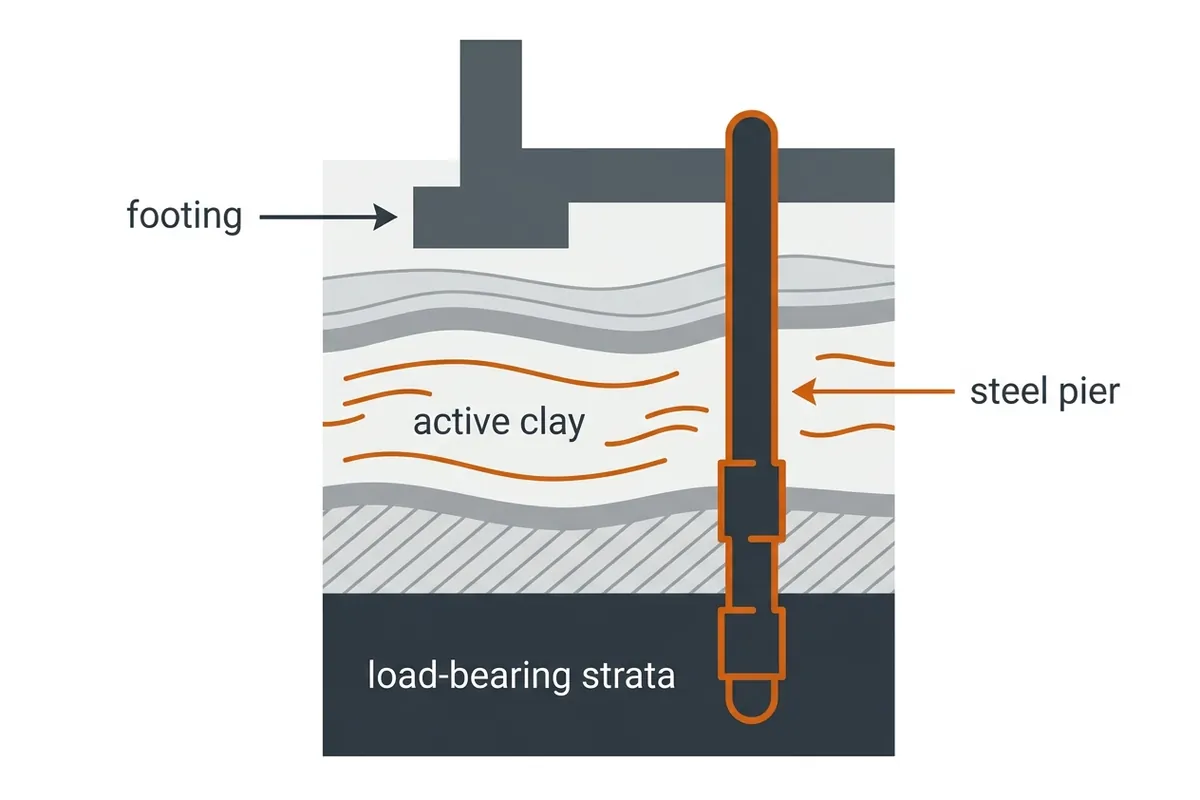
What a real repair involves
Surface patches fail because cracks live through the wall, not on it. Injection fills that full depth: epoxy when the crack is dormant and the goal is restored strength (the cured joint outmuscles the surrounding concrete) or polyurethane foam when water is present, expanding through the void and staying flexible as seasons work the wall. Cracks with movement history get carbon fiber staples across their line, so the repair holds even if the wall flexes again. Ask for every repaired crack to be photographed and logged with a width reading, which turns your basement wall into a monitored instrument instead of a worry.
When the crack is a witness
A crack is concrete testifying about force. One dormant crack, repaired, ends the matter. A family of cracks, or one that reopens, testifies to settlement or wall pressure still in progress, and injecting it again would be paying to silence a witness. That's the point where the evaluation earns its keep: laser floor levels and deflection checks either clear the foundation or catch the real problem while it's still a small one.
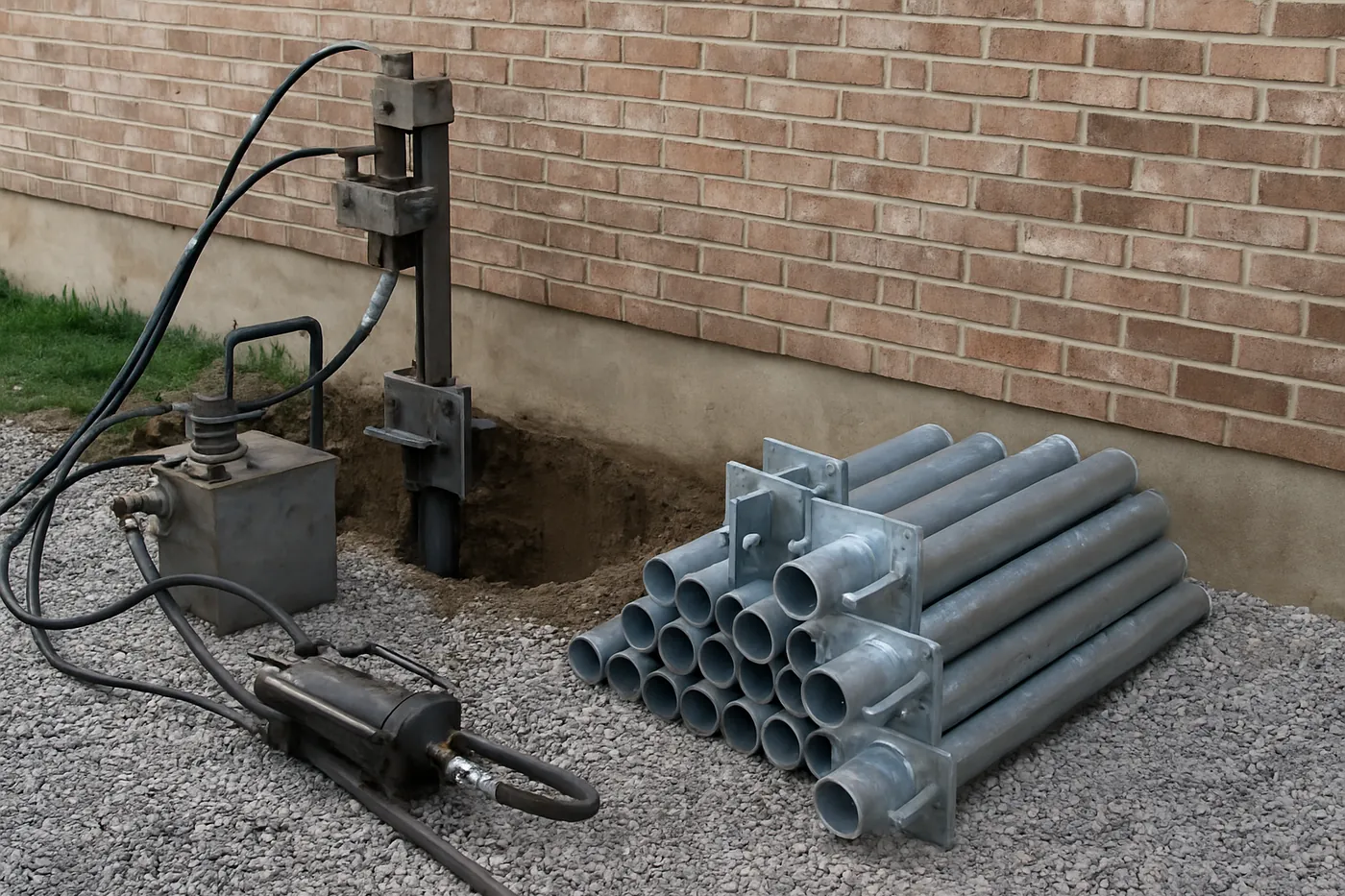
Injection, step by step, and why material choice matters
A proper injection starts with surface prep: the crack face gets cleaned, ports set every eight inches or so, and the face sealed so the injected material has nowhere to go but in. Then the choice that separates a repair from a cosmetic: polyurethane foams and flexes, the right call for wet cracks and normal seasonal movement, because it seals water out while tolerating the hairline breathing every St. Louis foundation does. Epoxy welds structurally: the right call when an engineer wants the crack to transfer load again, and the wrong one where movement will simply crack the rigid repair's edge. Matching material to crack is the actual skill; the gun work takes an hour.
Wide or moving cracks get carbon-fiber staples across the repair: cheap insurance that turns "sealed" into "reinforced." And every injection here comes with the honest caveat: if the crack is a witness to settlement or wall pressure, sealing it treats the symptom. The evaluation should say which story your crack is telling before anyone quotes either version.
Crack repair questions, straight answers
Which foundation cracks are serious?
Direction and width tell most of the story. Vertical hairlines in poured concrete are usually shrinkage: seal against water and move on. Diagonal cracks widening past a quarter inch suggest differential settlement. Horizontal cracks in block walls signal lateral pressure and deserve prompt structural attention. Anything paired with sticking doors or sloped floors gets measured, not guessed at.
What does crack repair cost in St. Louis?
Injection repairs run about $400-$800 per crack; structural stitching with carbon fiber staples $700-$1,500. If a crack traces back to settlement or wall pressure, the honest fix is the underlying repair: injection alone would be a cosmetic bandage, and a good specialist will say so.
Epoxy or polyurethane: what goes in the crack?
Epoxy structurally welds a dormant crack back to full strength. Polyurethane foam stays flexible and chases water through wet, hairline, or slightly active cracks. Wrong choice, failed repair: a leaking crack epoxied shut often just moves the water to a new exit. The choice should be made per crack, with the reason explained.
The crack keeps coming back after patching. Why?
Because patching addressed the symptom. A crack that reopens is moving: seasonal clay cycling at minimum, active settlement at worst. Reopened repairs are a diagnostic gift: they say where and roughly how much. That's when measurement and possibly piering enter the conversation.
Can I just watch a small crack?
Sensible, if it's the right crack. Pencil-mark the ends with a date, measure the width at a marked point, and recheck quarterly. Growth in length or width, or new companions, upgrade it to an evaluation. Monitoring honestly beats buying an injection you don't need.
Get a St. Louis foundation evaluation
Tell us what the house is doing (cracks, bowing, sticking doors, sloping floors) so the evaluation starts from what you have seen. A specialist who serves the St. Louis area will call you back.