
Exterior foundation waterproofing in St. Louis seals the wall but requires full-depth excavation; interior perimeter drainage runs $2,500–$8,000 and relieves water at the footing. With full basements standard and clay swelling against the wall, most occupied homes choose interior drainage plus grading fixes.
What each buys in a full-basement town, and how wall repairs change the answer.
Two systems, two promises
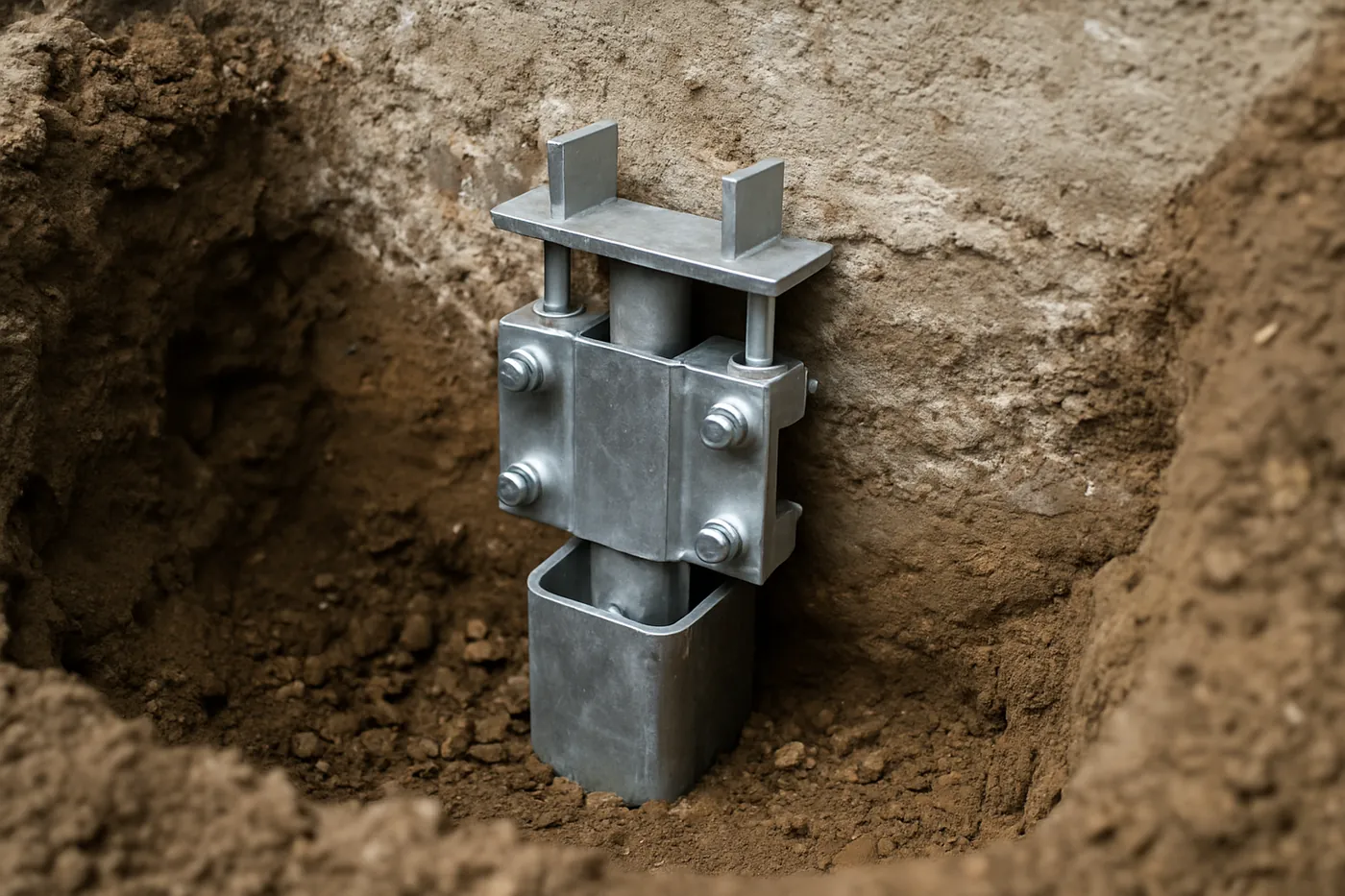
Exterior waterproofing is the textbook barrier: excavate to the footing, clean the wall, membrane, footing drain, backfill. Water stops at the wall face. The textbook assumes the wall is reachable — and on an occupied lot in Kirkwood or Webster Groves, reaching it means removing and rebuilding landscaping, walks, and sometimes decades of garden.
Interior water management concedes water will reach the footing and removes it there: perimeter channel under the slab edge, sealed sump, discharge away from the house. Floor stays dry; wall still sees soil moisture. It installs from inside in days, any season — including under a finished basement’s worth of belongings.
Side by side
| Exterior membrane | Interior drainage | |
|---|---|---|
| Promise | Water never enters the wall | Water never crosses the floor |
| STL cost | Per wall — excavation dominates | $2,500–$8,000 full perimeter |
| Disruption | Full-depth dig around an occupied house | Slab-edge work inside, days |
| Freeze-thaw | Coatings ride resettling backfill above the 30in frost line | Below frost, unaffected |
| Swell pressure | Sealed; pressure stays on the wall | Relieved at the footing |
| Best case | Wall already open — usually for structural repair | Occupied house, finished basement, active seepage |
Where waterproofing meets foundation repair
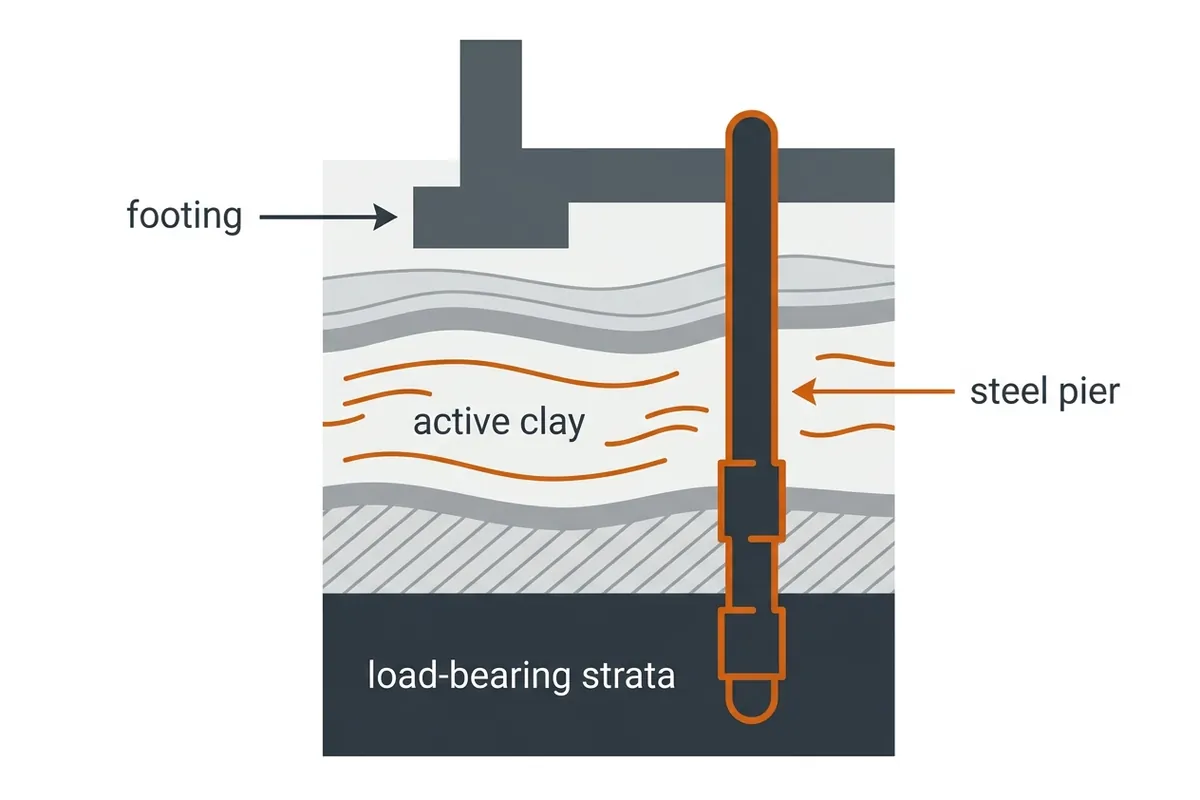
St. Louis’s signature failure is the bowing basement wall — lateral clay pressure, the same saturation that drives seepage. When a wall needs structural work that opens the exterior, membrane and footing drain go in for the cost of materials, because the excavation was already bought. When nothing else requires a dig, buying one purely for waterproofing rarely beats interior drainage on any axis that matters here. And when the moisture cycle has moved the house itself, the settlement question gets answered first — releveling after waterproofing beats waterproofing twice. Sequencing lives in the written scope; prices live in the cost guide.
Before either: the outside walk
Downspouts, grading, discharge. Concentrated roof water is the cheapest foundation problem in St. Louis and the cheapest fix, and it feeds everything — seepage, wall pressure, and settlement alike. Every evaluation we run starts outside; the waterproofing page carries the sump and drainage detail this comparison builds on.
What the system needs from you afterward
Interior drainage is machinery and earns a service interval. Twice a year, pour a five-gallon bucket into the sump pit and confirm the float lifts and the pump discharges — that one test catches most failures before water does. Follow the discharge outside and make sure it still carries water well away from the wall. Before the first hard freeze, check that the line can’t ice shut, because a frozen discharge is how a working pump floods a basement overnight. Clean the gutters and keep the grade falling away for ten feet. And if the walls were braced or anchored, keep the recommended re-check interval — wall systems are monitored, not installed and forgotten.
Waterproofing questions, straight answers
Which approach fits a typical St. Louis basement?
Interior drainage, most of the time. Full basements are standard here, which means eight feet of wall against clay that swells when saturated — and an interior perimeter system at $2,500 to $8,000 relieves that water at the footing without excavating an occupied lot. Exterior sealing earns its dig in narrower cases, usually when a wall is open anyway.
Does the 30-inch frost depth matter to this choice?
It leans interior. Missouri code puts footings 30 inches down, and the freeze-thaw above that line works exterior coatings hard — backfill resettles, winter cycles crack brittle sealants, and the system that lives outside ages faster than the one below the slab. Interior drains sit beneath all of it and ignore winter entirely.
My wall bows and leaks. Which problem comes first?
The structure, always. A leaning wall under lateral clay pressure needs restraint before any water system is worth buying — and if that repair opens the exterior, membrane and a footing drain go in while the trench exists, at the cost of materials. That combination is the main honest case for exterior waterproofing on an existing STL house.
Will interior drainage dry out my brick walls?
No — it keeps water off your floor, not out of the wall. Century brick and stone foundations still wick soil moisture, which is why finished basements in older stock pair the drain with vapor management rather than pretending the wall is sealed. Exterior membrane is the only true wall barrier; the question is whether that's worth excavating for, and usually it isn't.
What should I try before buying either system?
The outside water, first and cheaply: downspout extensions, grading that falls away from the house, clean gutters ahead of spring rains. A share of wet STL basements are roof-water problems wearing a waterproofing costume — and every drainage fix also slows the clay cycle that drives settlement and wall pressure. We start every evaluation at the downspouts.
Get a free St. Louis foundation evaluation
Tell us what the house is doing — cracks, bowing, sticking doors, sloping floors — and we'll schedule an evaluation with photos and crack measurements. We reply the same business day.