
Bowing basement wall repair in St. Louis runs $2,500–$10,000 for most homes: carbon fiber straps from about $350 per strap, anchors and braces above that. The metro's shrink-swell clay loads basement walls laterally every wet season, which is why bowing leads the region's structural calls.
Reading the wall, the three restraint systems, and when straightening beats bracing.
Reading a wall that's losing
Stand at one end of the basement wall and sight along it. A healthy wall is a plane; a losing wall shows a bulge at mid-height, a horizontal crack tracking a mortar course, or stair-step cracks climbing from the corners. Upstairs, the top of the wall may tip in enough to crack the sill line. Most metro walls bow slowly (a quarter inch a year in bad stretches) which is exactly why early measurement matters: every system works better on a wall that hasn't traveled far.
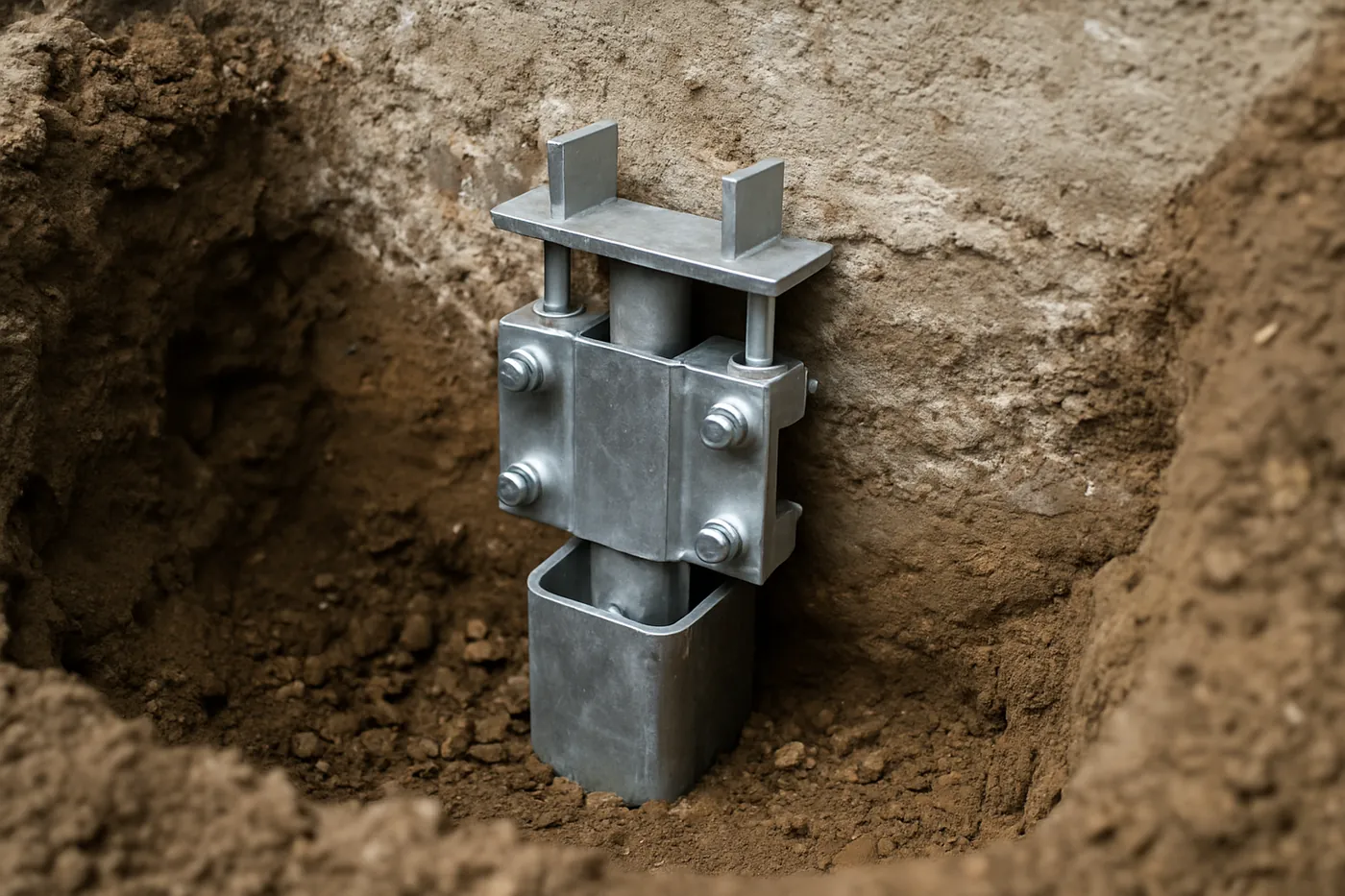
Three ways to hold the line
| System | How it works | Right when |
|---|---|---|
| Carbon fiber straps | Epoxy-bonded straps make the wall itself tension-strong | Deflection under ~2 inches, footing sound |
| Wall anchors | Interior plate tied by rod to an earth anchor out in the yard; tightenable over time | Moderate bowing with yard access |
| Steel I-beam braces | Beams seated against footing and joists shoulder the load | Moderate-to-heavy bowing, tight lots, interior-only access |
Anchors and beams aren't just restraint: tightened season by season as the clay relaxes, they can recover part of the deflection. Where a wall has moved too far to trust, excavate-and-straighten (or rebuild) is quoted plainly, because strapping a failed wall is malpractice.
Where wall work sits in a full foundation repair
A bowing wall is foundation repair's most urgent chapter but rarely its only one. Walls bow because the clay outside is saturated; saturated clay also leaks through cracks, loads the footing drains, and, when the cycle flips dry, settles footings. So a wall scope here gets written against the whole foundation: deflection measured on every wall (not just the loud one), floor levels shot to catch settlement the wall distracted you from, and the water plan priced alongside the steel. Restraint without the rest is how the same house calls somebody again in five years.
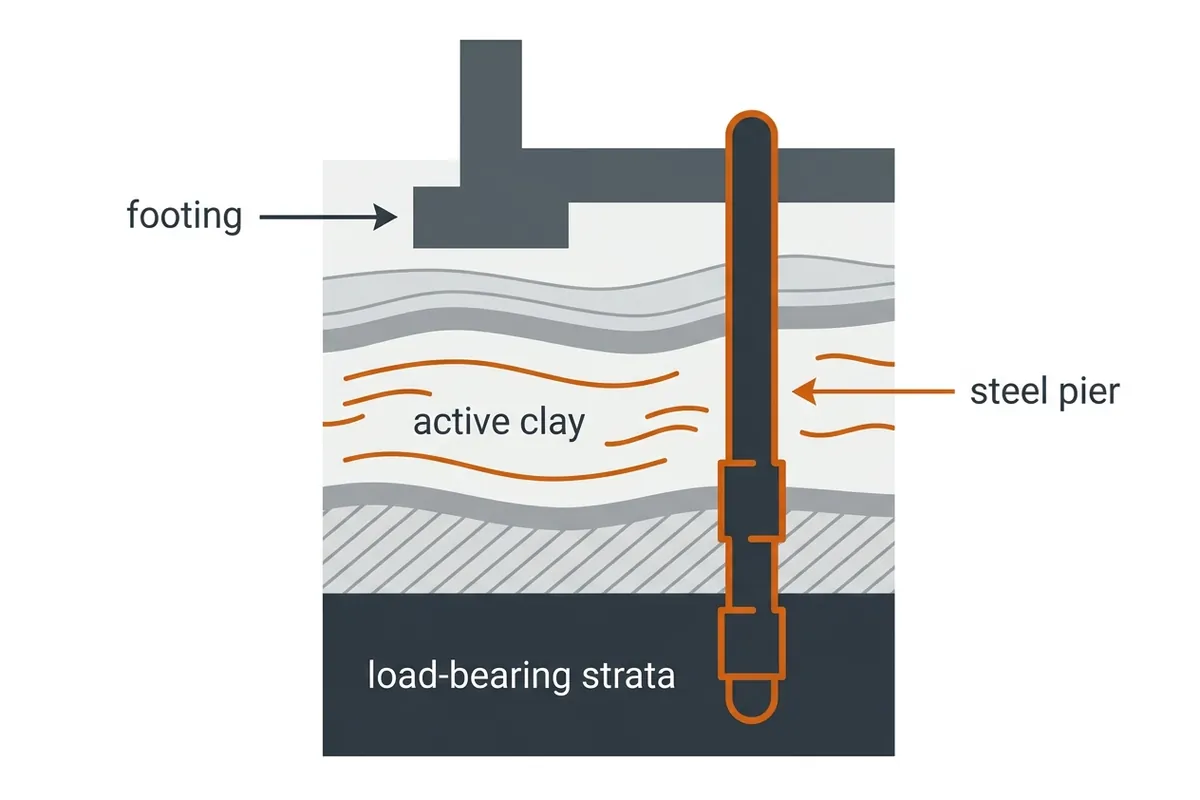
Then take the pressure away
The wall bowed because saturated clay pushed it. Leave the saturation and you've braced a wall that's still under siege, so scopes here usually pair restraint with the water work: gutters and grading sending roof water away, and where the lot demands it, interior drainage relieving the hydrostatic push. Restrain the wall, drain the enemy. That pairing is why repairs stay fixed.
Reading the inch marks: how engineers grade a bowing wall
Wall repair in this metro is graded in inches of deflection, and the grading decides the fix. Under about an inch of inward movement, carbon fiber straps (epoxy-bonded, tensioned flat against the block) lock the wall where it stands; they're the right answer early, which is why calling at the first horizontal crack is the cheap version of this story. Between one and two inches, steel comes into the conversation: I-beam braces seated at the footing and pinned at the joists, or plate anchors reaching into the yard, both engineered to resist further movement and, with anchors, capable of gradual straightening across dry seasons. Past two inches, straightening or rebuild economics take over, and the honest scope prices both so you can decide with numbers instead of dread.
The wall never gets stronger by waiting. Clay pressure is seasonal but cumulative (each saturated spring adds a little more bow than the previous dry fall relieved) so the grade your wall earns today is the best grade it will ever have. Measure it; the inch marks decide everything.
Bowing wall questions, straight answers
Why is my basement wall bowing inward?
Saturated clay. St. Louis basement walls hold back soil that expands when wet: thousands of pounds of lateral pressure per running foot. Block walls bow at the mortar joints, usually mid-height; even poured walls can crack horizontally and lean. It is the most common structural failure in the metro.
What does bowing wall repair cost?
Carbon fiber straps run roughly $350-$700 per strap installed, wall anchors and braces more, and full straightening or rebuild jobs reach $10,000+. Most St. Louis walls are caught in the $2,500-$10,000 window. Deflection measurement, not eyeballing, picks the system.
Carbon fiber, anchors, or beams: how is the choice made?
By how far the wall has moved. Under about two inches of deflection with sound footing, carbon fiber straps lock the wall where it stands. More movement wants wall anchors or steel I-beam braces that can be tightened over seasons to walk the wall back. Past serious deflection, excavate-and-straighten or rebuild is the honest answer.
Does the yard have to be dug up?
Only for some systems. Carbon fiber and interior beams install from inside. Plate anchors need a small trench out in the yard for the earth anchor. Straightening requires excavating the wall's exterior, which is also the moment to waterproof it properly, since the digging is paid for.
Will the repair stop the water too?
Structural repair and waterproofing are cousins, not twins. The pressure that bowed the wall usually pushed water through it as well, so most bowing-wall scopes here pair with drainage (see basement waterproofing) and fixing the water is what keeps the pressure from rebuilding.
Get a St. Louis foundation evaluation
Tell us what the house is doing (cracks, bowing, sticking doors, sloping floors) so the evaluation starts from what you have seen. A specialist who serves the St. Louis area will call you back.