
Helical and push piers for St. Louis foundation repair both run $1,200–$3,000 per pier; the choice follows the structure. Push piers drive to logged refusal under the house’s own weight — ideal for century brick — while helicals torque to a measured capacity, fitting light postwar frame, porches, and additions.
How each proves capacity, and how STL’s housing eras sort themselves between them.
Two proofs of one promise
Both piers move a footing’s load below the active clay to bearing that ignores the seasons. A push pier is hydraulic steel driven beside the footing, using the structure as reaction weight until it refuses to advance; the logged refusal pressure is the proof. A helical pier screws in with welded plates; installation torque correlates with capacity, so the gauge proves the pier as it turns — no structure weight needed, which is exactly where its advantage lives.
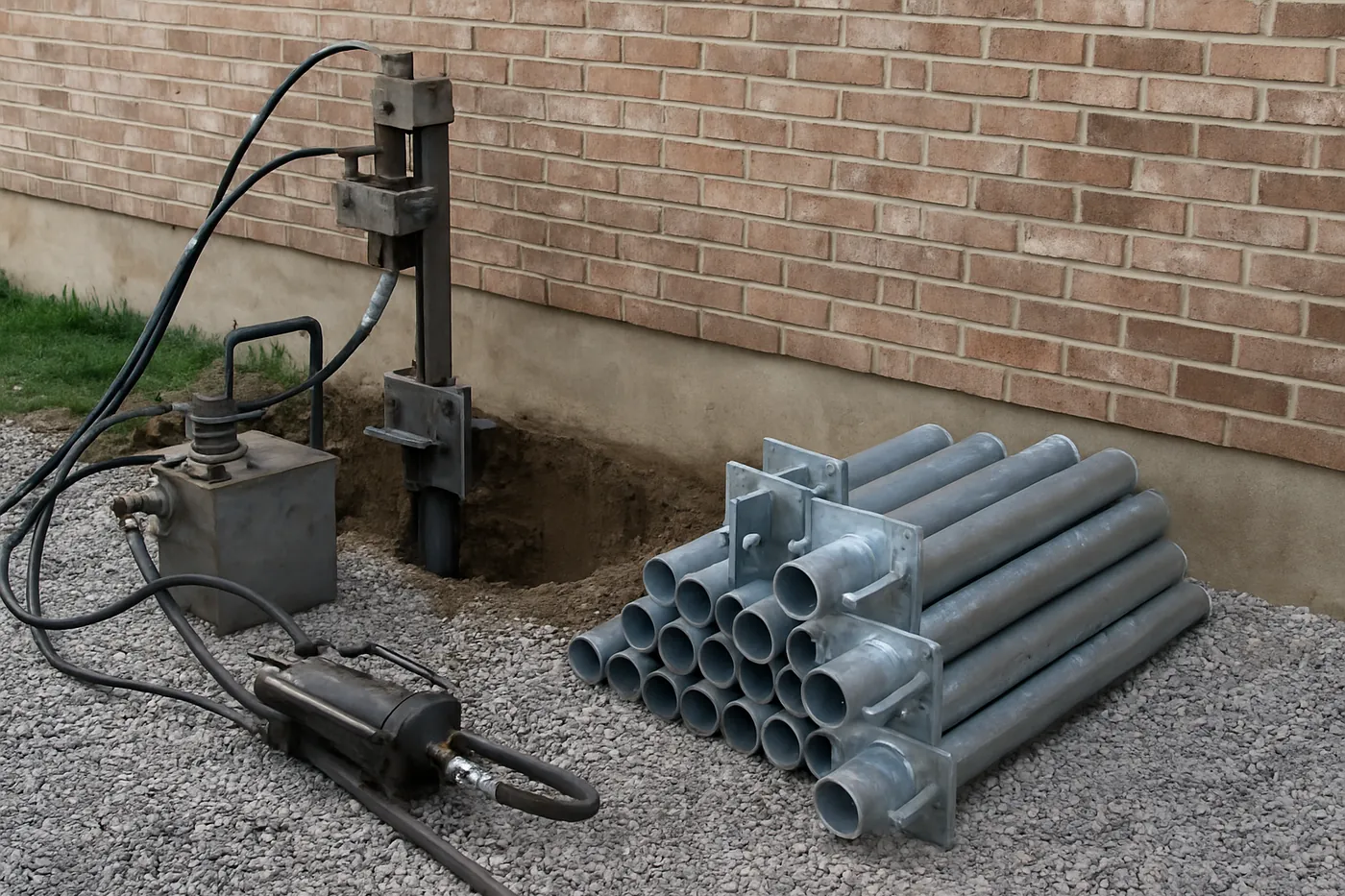
Side by side
| Push piers | Helical piers | |
|---|---|---|
| Advance | Driven against the structure’s weight | Rotated to specified torque |
| Proof | Refusal pressure, logged per pier | Installation torque, logged per pier |
| Needs house weight | Yes | No |
| STL sweet spot | Century brick: city blocks, Webster Groves, Kirkwood | Postwar frame: Affton, Florissant; porches, additions |
| New construction | No | Yes — proven before framing |
| Cost | $1,200–$3,000 per pier; depth to bearing sets the spread | |
What the metro’s ground does to depth
St. Louis doesn’t offer one depth to bearing. River-adjacent alluvium can run deep before anything competent answers; the till uplands are shallower; and the south metro’s limestone can end a pier drive early — fewer sections, lower cost, provided the log confirms genuine bearing rather than a ledge. Depth, not pier type, is what separates most low bids from high ones, and it’s why every bid should state its depth assumption and what happens to price beyond it. Whether piers are the right repair at all is the settlement diagnosis — including the karst check in the south metro.
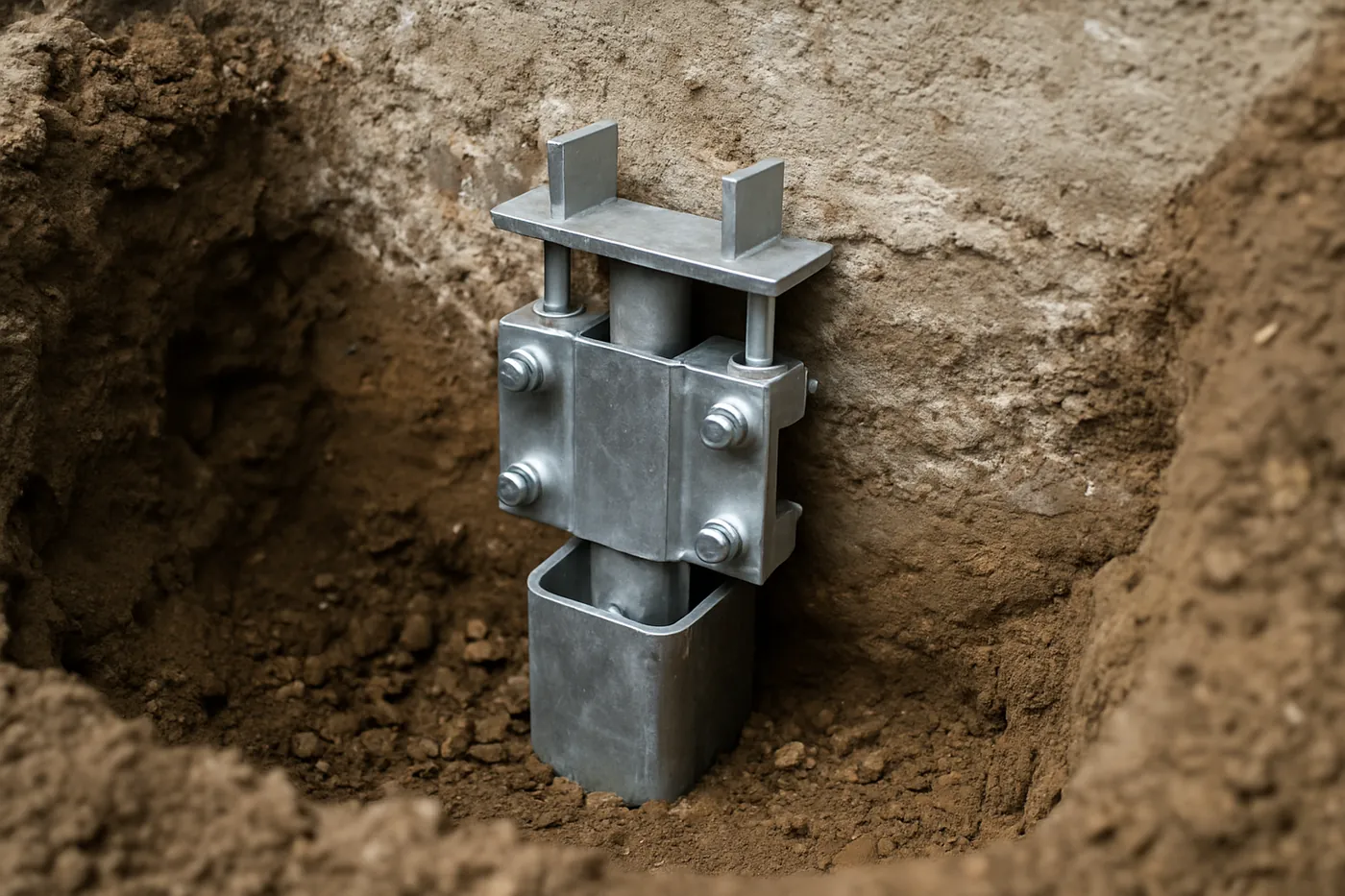
Brick changes the lift, not the pier
The era split has one more consequence: lifting. Frame houses tolerate recovery lift forgivingly; century masonry does not, and a lift staged carelessly writes new stair-step cracks while erasing old ones. On brick we lift in smaller synchronized increments against live crack monitoring, or stabilize without recovery where the masonry argues against it — a judgment the written scope states before steel goes in. Full install mechanics live on the piering page; the arithmetic is in the cost guide.
What the pier warranty is actually worth
Read the warranty before the price. It covers the piers’ capacity — the supported section carrying its design load — not the whole house, and not the parts nobody piered. Four questions separate a real warranty from a brochure: is it transferable to the next owner, does a transfer cost a fee, does it cover the piered section or the structure, and does it survive the contractor closing its doors (third-party-backed warranties do). If bowing walls were part of the scope, ask specifically what the wall system’s warranty promises — arrest of further movement is the usual promise, not a return to plumb, and that distinction surprises people years later. Keep the install log; it is the evidence behind the paper.
Pier questions, straight answers
Which pier type is cheaper in St. Louis?
Neither — both run $1,200 to $3,000 per pier, with the spread set by depth to bearing and access rather than the steel. Depth varies real distances here: alluvial ground near the rivers, glacial till uplands, and shallow limestone south all put competent bearing at different depths. The honest variable in every STL pier bid is feet, not type.
Which type suits the century brick stock?
Push piers, typically. Two- and three-story brick in the city, Webster Groves, and Kirkwood carries serious reaction weight, and driving to logged refusal under that mass is as convincing as pier proof gets. The same weight demands careful lift staging — brittle masonry punishes uneven lifting — which is a labor question, not a pier-type question.
Which type suits postwar frame houses?
Helical, usually. The one-story frame ranches in Affton, Florissant, and the postwar rings are light — a push pier can run out of house weight before honest refusal. A helical torques to a measured capacity independent of the structure, which is also why it's the standard answer under porches, stoops, and additions across the metro.
What happens when a pier meets shallow limestone?
It gets easier, mostly. Where bedrock runs shallow in the south metro, piers reach competent bearing in fewer sections — less steel, lower cost per location. The care point is confirming it's bearing rock rather than a boulder or ledge; drive behavior and the per-pier log tell that story. In karst-flagged situations, an engineer reviews before steel is ordered.
What documentation comes with the piers?
A per-pier log — refusal pressure for push, final torque for helical — plus the transferable warranty. Keep them together: St. Louis buyers' inspectors see plenty of foundation repairs, and the difference between 'engineered with logs' and 'someone put piers in' is real money at resale.
Get a free St. Louis foundation evaluation
Tell us what the house is doing — cracks, bowing, sticking doors, sloping floors — and we'll schedule an evaluation with photos and crack measurements. We reply the same business day.